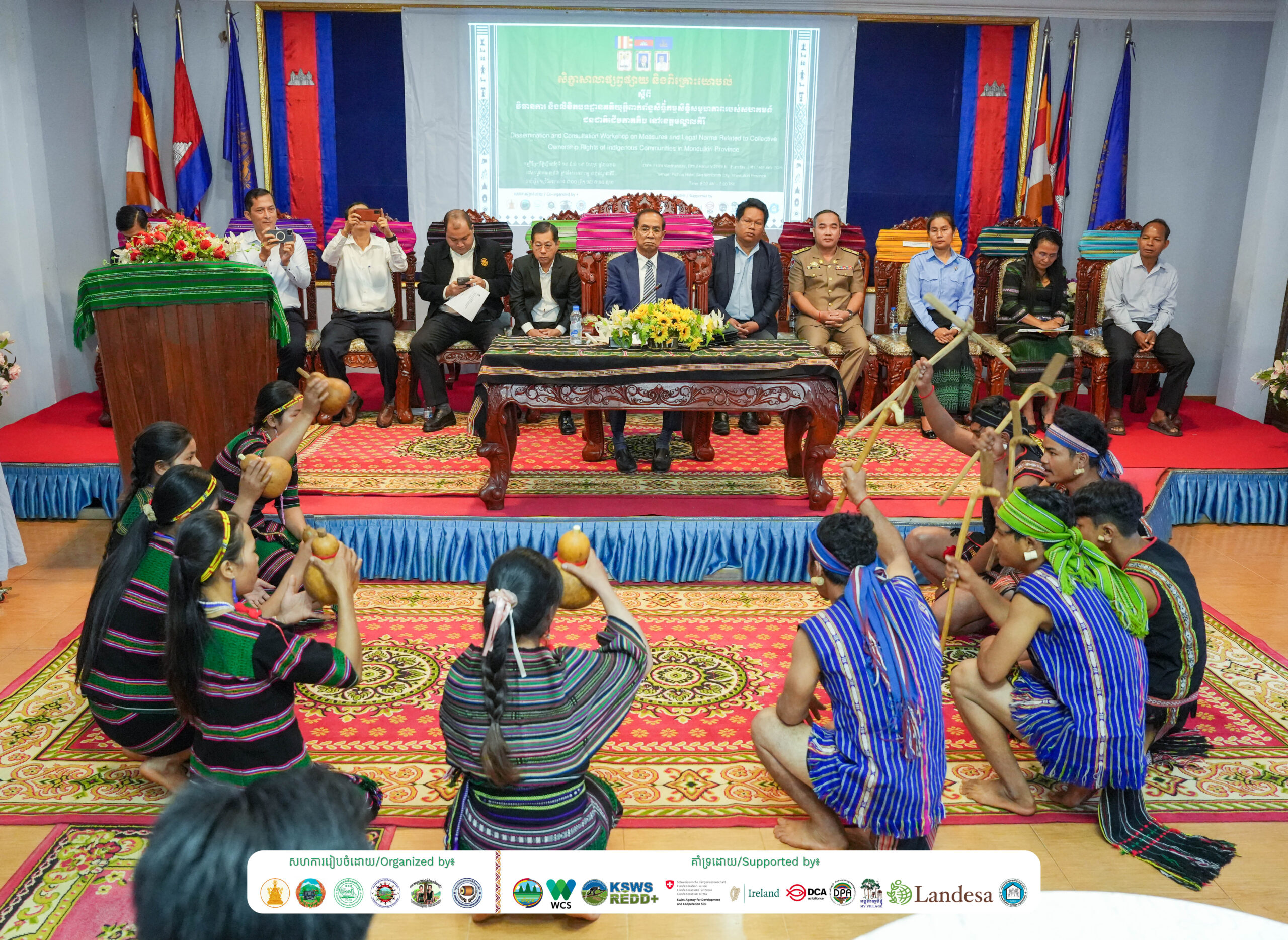
Mondulkiri province 18-19 Feb 2026: Dissemination and consultation workshop on measures and legal norms related to collective ownership rights of Indigenous communities.
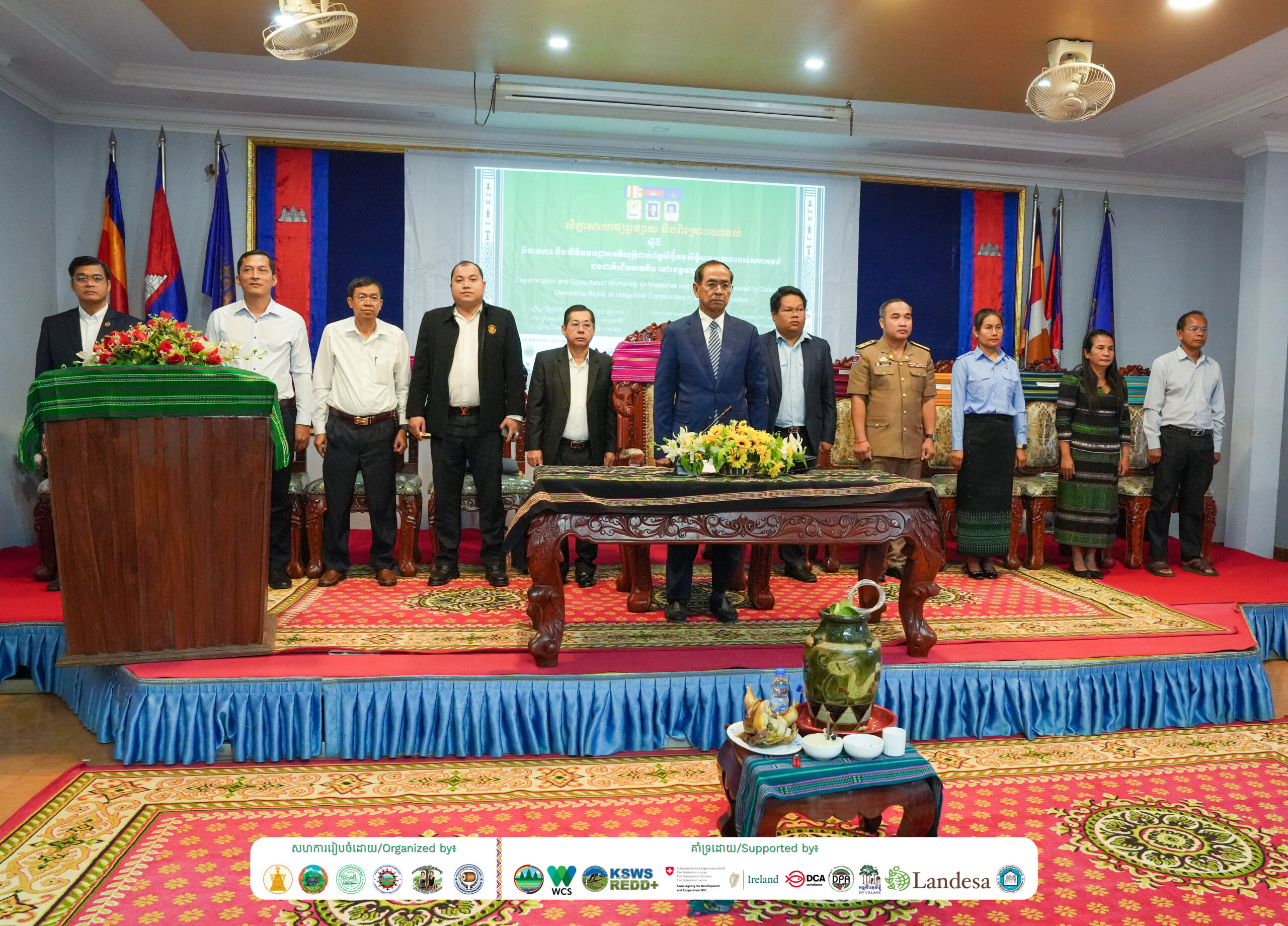
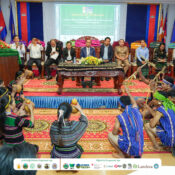
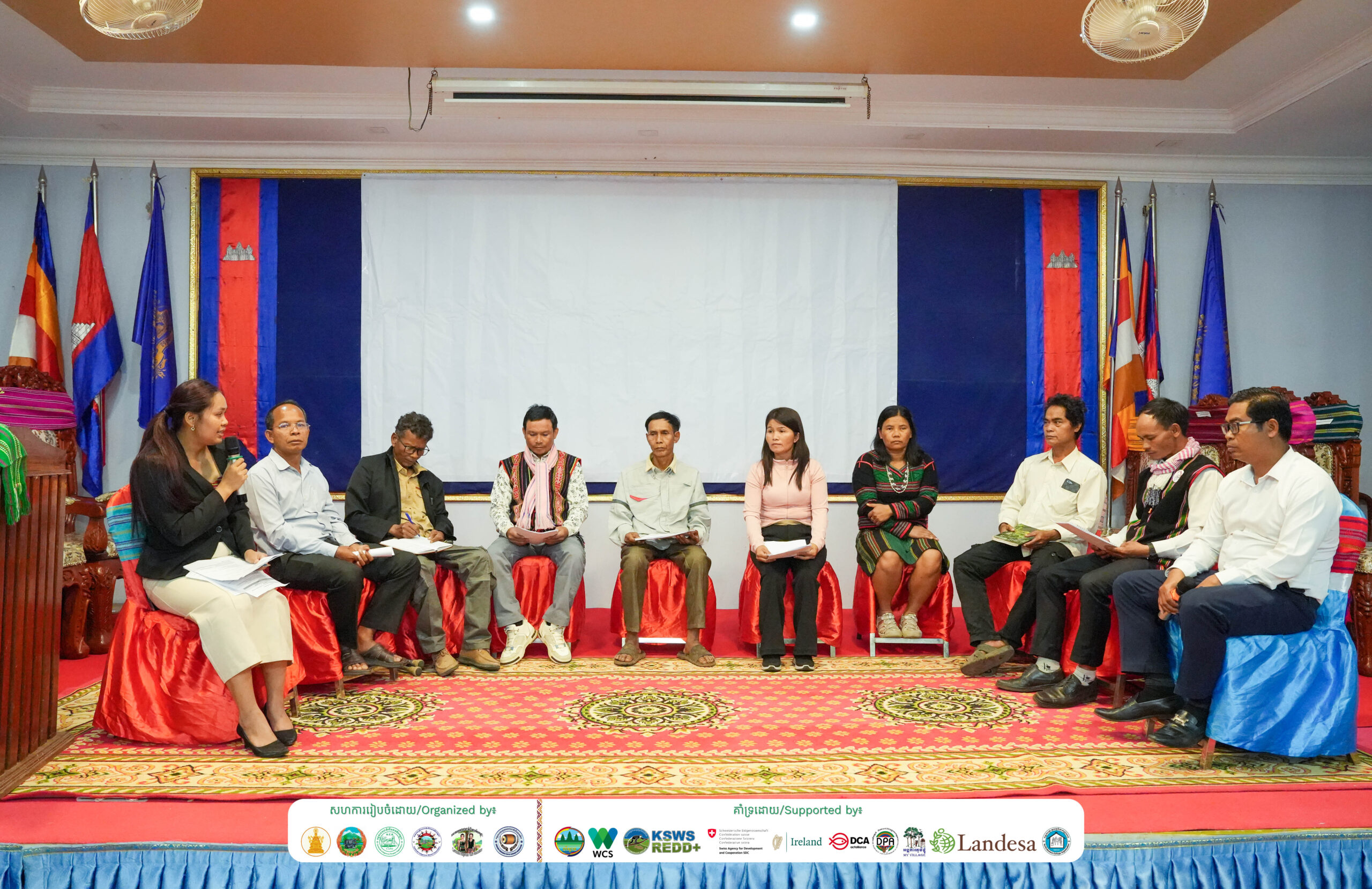
From18 to 19 February 2026, the Cambodian Indigenous Peoples Organisation (CIPO), in collaboration with the Ministry of Interior (MoI), Mondulkiri Provincial Administration, Wildlife Conservation Society (WCS) Cambodia, and CIPA network members, including CIYA, CIWA, and CIPL, organised a dissemination and consultation workshop on measures and legal norms related to collective ownership rights of Indigenous communities in Mondulkiri province. The workshop aimed to disseminate relevant legal norms and government measures to sub-national authorities, justice sector actors, NGOs, Indigenous community representatives, and credit institutions; to consult on challenges in the implementation of Indigenous collective land registration; and to strengthen partnerships among stakeholders responsible for protecting Indigenous lands, state public assets, and the environment.
A total of 123 participants (37 women) attended the workshop, including 33 representatives from relevant ministries and authorities (2 women), 54 Indigenous community representatives (18 women) from Keo Seima and Ou Reang districts, and 34 representatives from development partner organisations (15 women). Among the participants, 85 were Indigenous Peoples, and 42 were Khmer, ensuring inclusive representation and meaningful dialogue among key stakeholders.
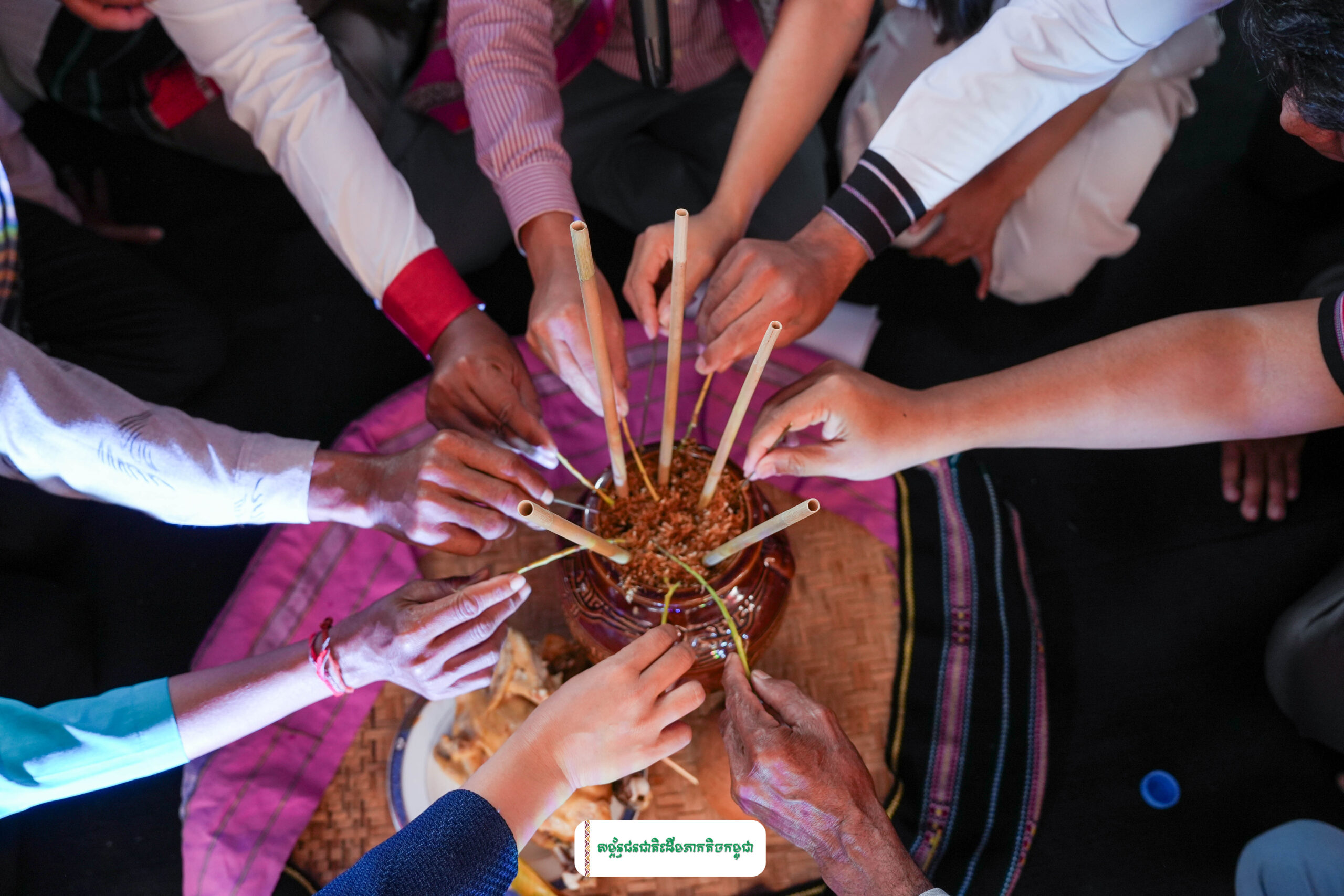
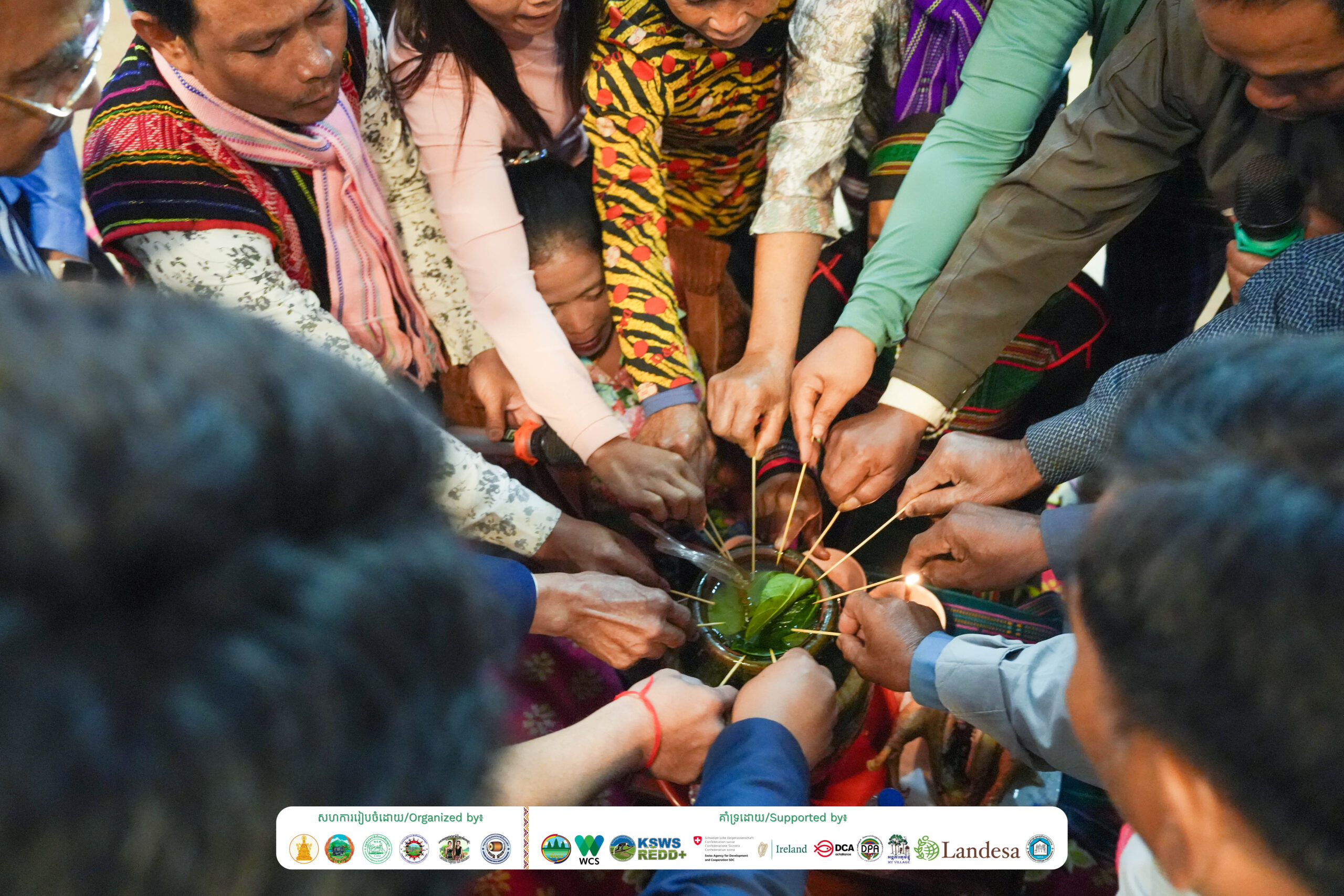
At the beginning of the event, as Indigenous sons and daughters, we honoured our traditions by conducting a ritual ceremony to seek blessings, happiness, and spiritual support from our ancestors. This ceremony was performed to ensure the event would proceed smoothly and successfully under their protection. In addition, members of the Bunong Indigenous community performed traditional music and dance using bamboo string instruments as a cultural expression to warmly welcome the distinguished guests. This performance reflected the rich cultural heritage and identity of the Bunong people.
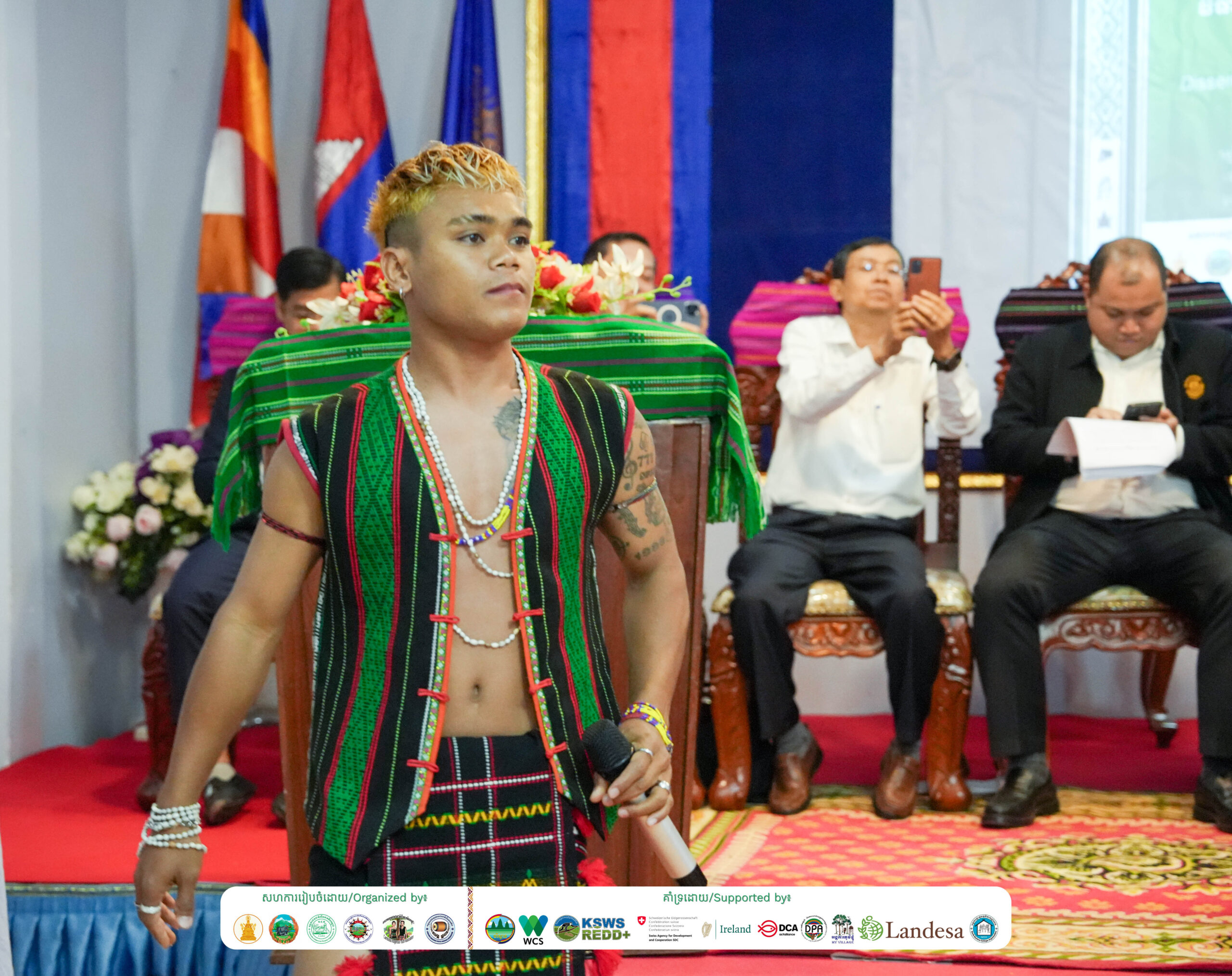
At the same time, Brao Indigenous youth from Ratanakiri province, Mr. Youn Mondet, delivered a hip-hop music performance. His song conveyed meaningful messages about the daily lives of Indigenous Peoples, their traditional occupations, their deep connection with natural resources, and their commitment to protecting and preserving the environment for future generations.
During the workshop, a representative from the Ministry of Interior presented key findings from a study on collective land registration involving 22 Indigenous communities in Mondulkiri province. The presentation highlighted several major challenges, including limited financial and technical resources
to support the collective land registration process, limited capacity and competence of relevant institutions to cooperate
and resolve land disputes, restrictions related to the 7-hectare land size policy affecting forest land and burial forest areas, challenges faced by communities in preparing preliminary land maps, impacts of biodiversity conservation corridor designation on community land, and discrepancies between land allocated and the size requested by communities.
At the same time, representatives from Indigenous communities, including Pu Kong, Pu Reang, Sre Lvi, Andong Kraleng, Pulung, Sre Ey, and Phnom Rai, raised concerns about ongoing challenges related to Communal Land Titles (CLT), Interim Protective Measures (ITM), and the overall land registration process. Communities that have received Interim Protective Measures also provided key recommendations, including requesting authorities to help prevent land encroachment and provide stronger support to communities, to stop outside individuals from interfering and creating division within Indigenous communities, to accelerate the designation of Indigenous cultural heritage areas, and to speed up the process of issuing Communal Land Titles. In addition, communities requested authorities and partner organisations to increase awareness and understanding among stakeholders about Indigenous communal land rights and to prevent illegal buying and selling of communal land. The workshop provided an important platform for dialogue, sharing experiences, and strengthening cooperation among government institutions, civil society organisations, and Indigenous communities to address challenges and promote the protection of Indigenous collective land rights in Mondulkiri province.
CIPO, with its partners, would like to express its sincere appreciation to the Ministry of Environment, WCS Cambodia, Swiss Cooperation Mekong, the Irish Embassy in Vietnam, DanChurchAid Cambodia, DPA Cambodia, MyVillage Organisation (MVi), Landesa, and North-Eastern Cottage for their valuable support in making this workshop possible and for their continued commitment to strengthening Indigenous land tenure security in Cambodia.